
A field of hunger
2019-2022
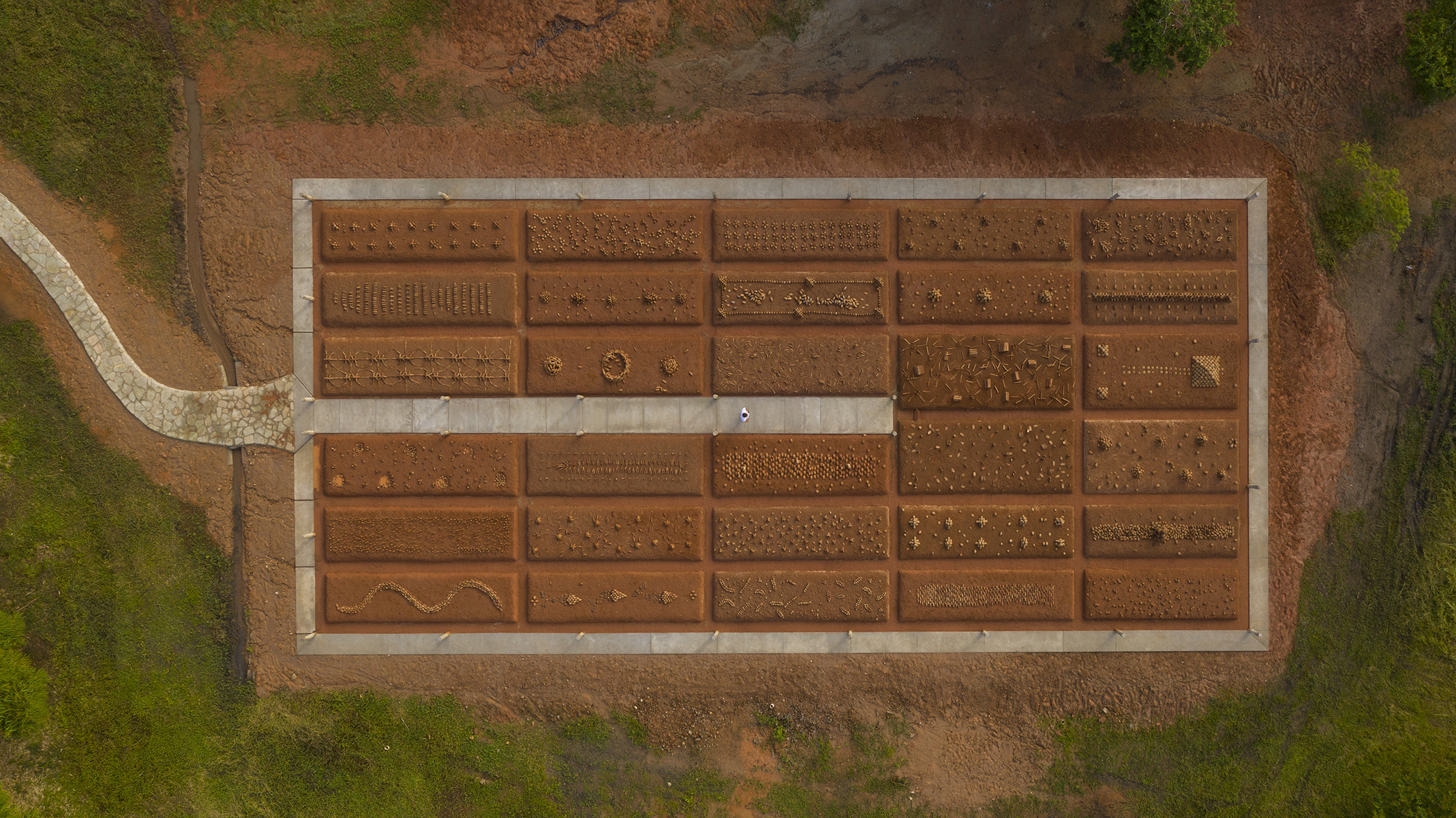
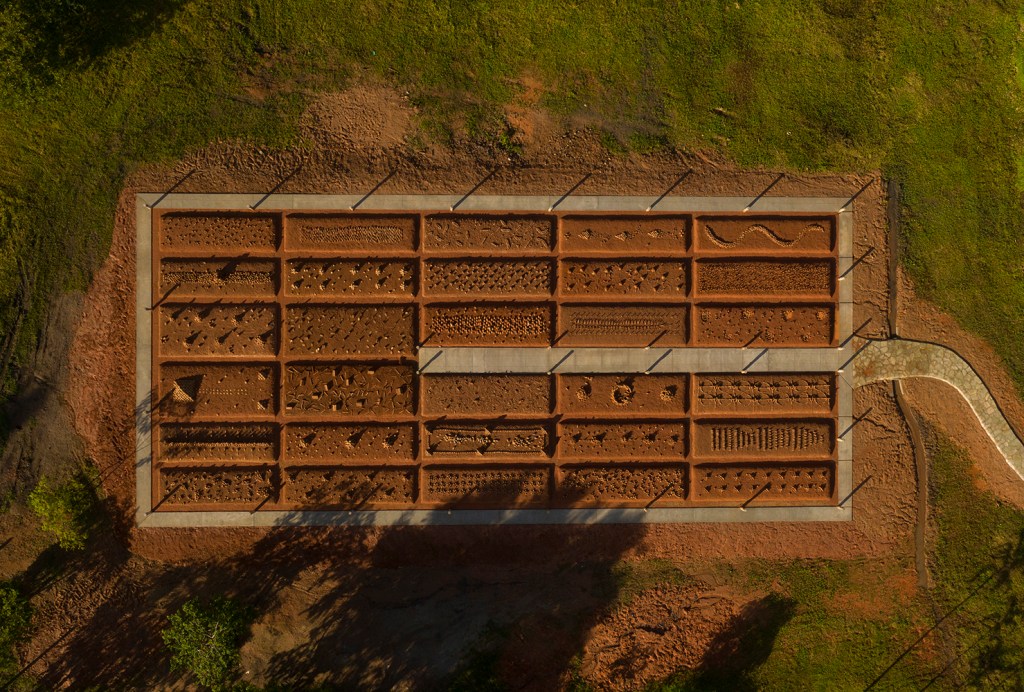
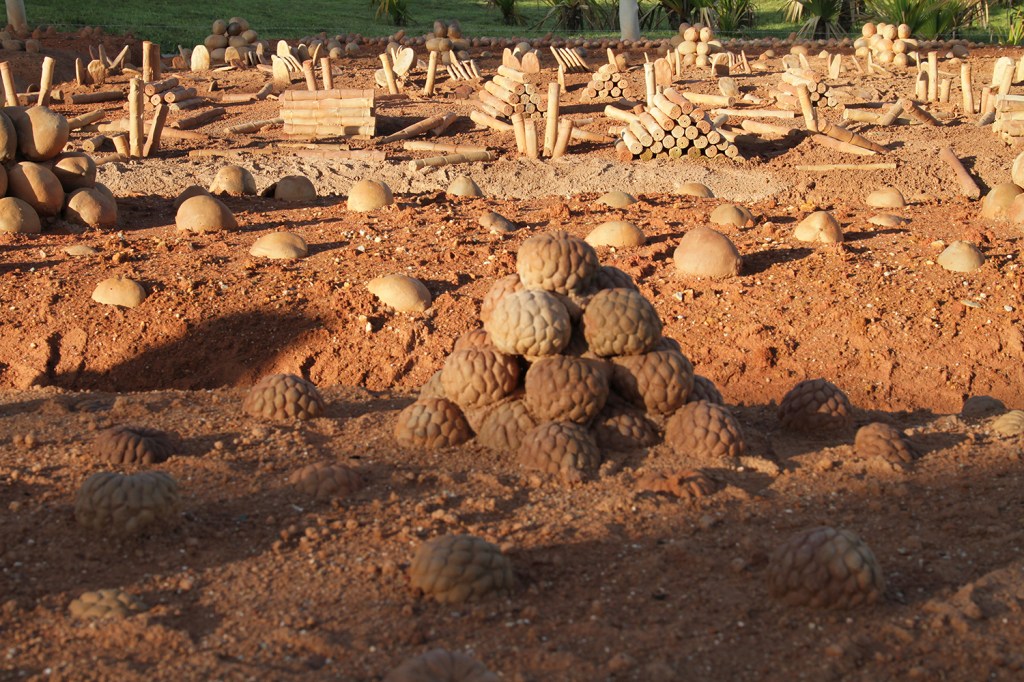
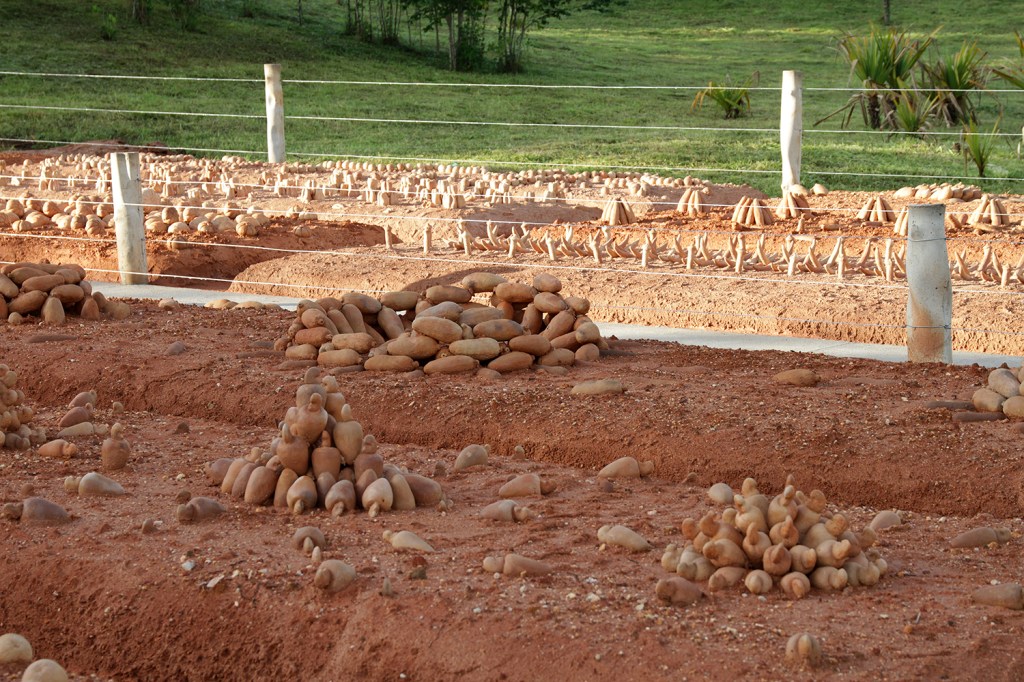
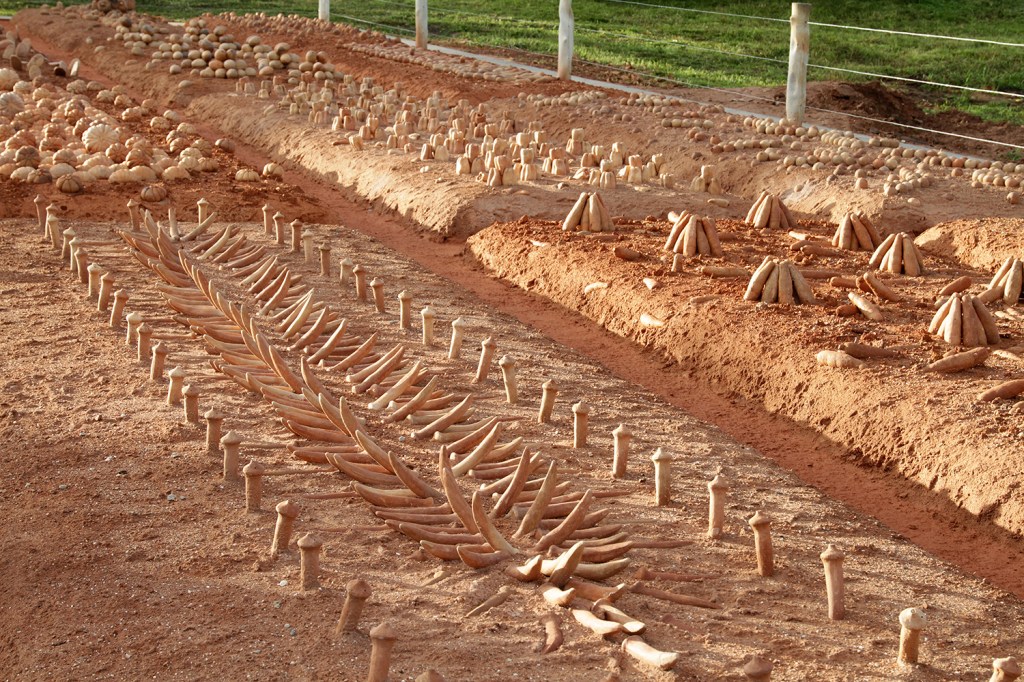
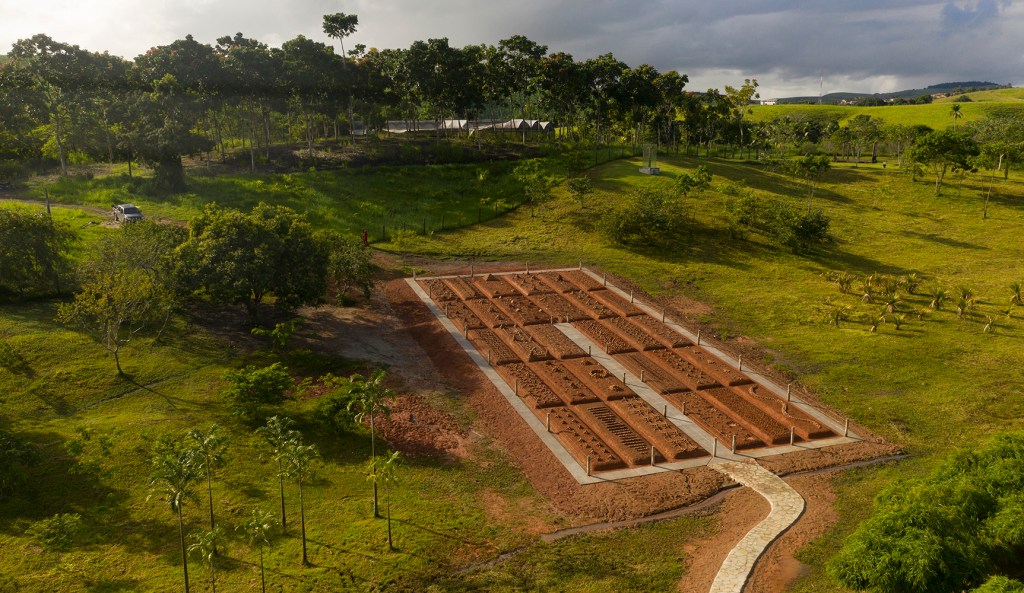
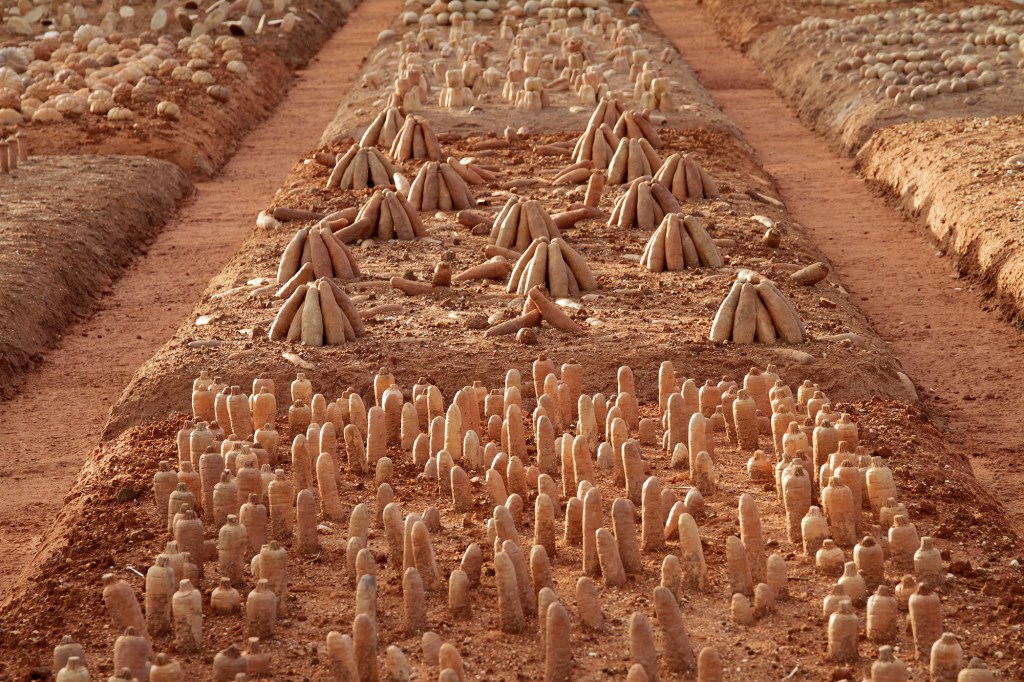
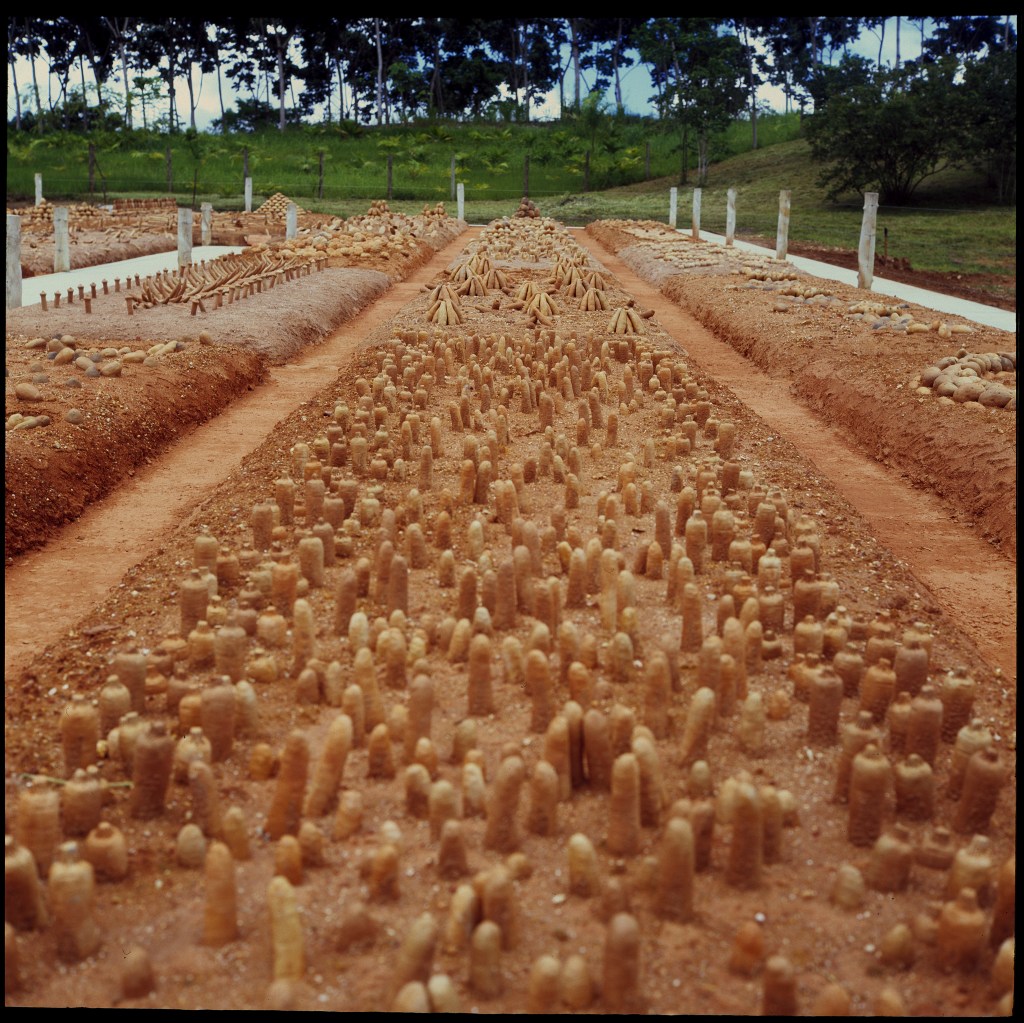
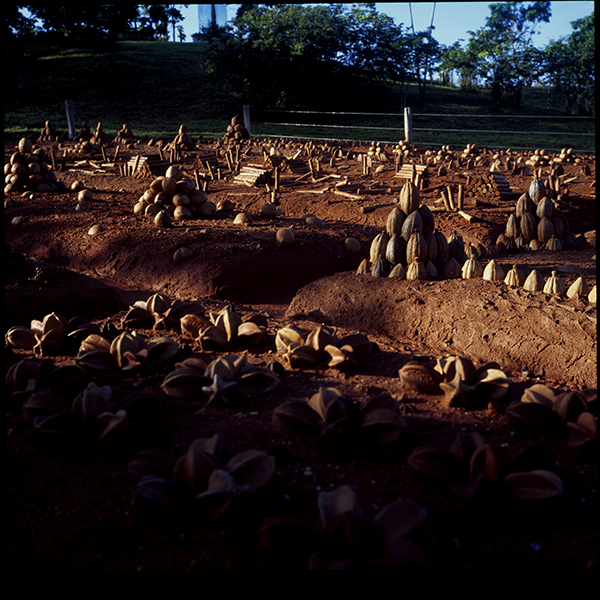
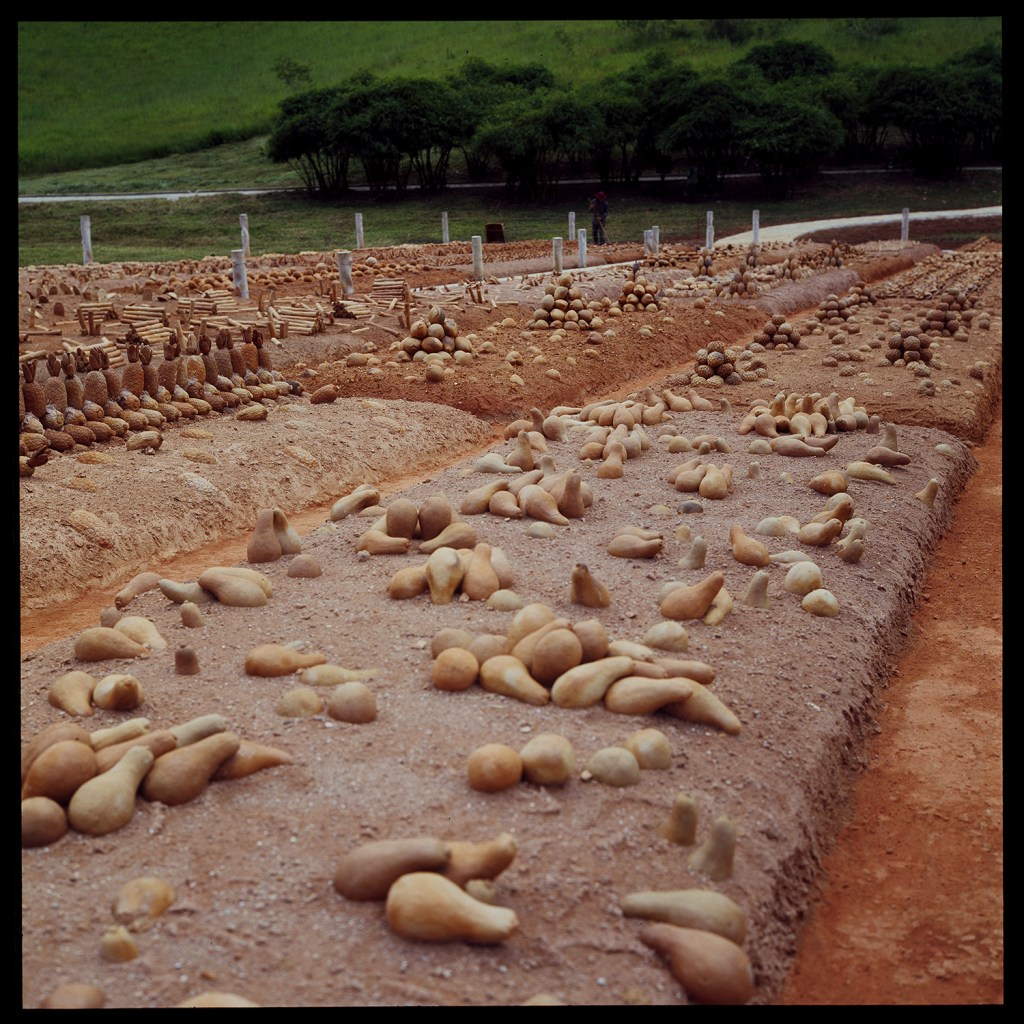
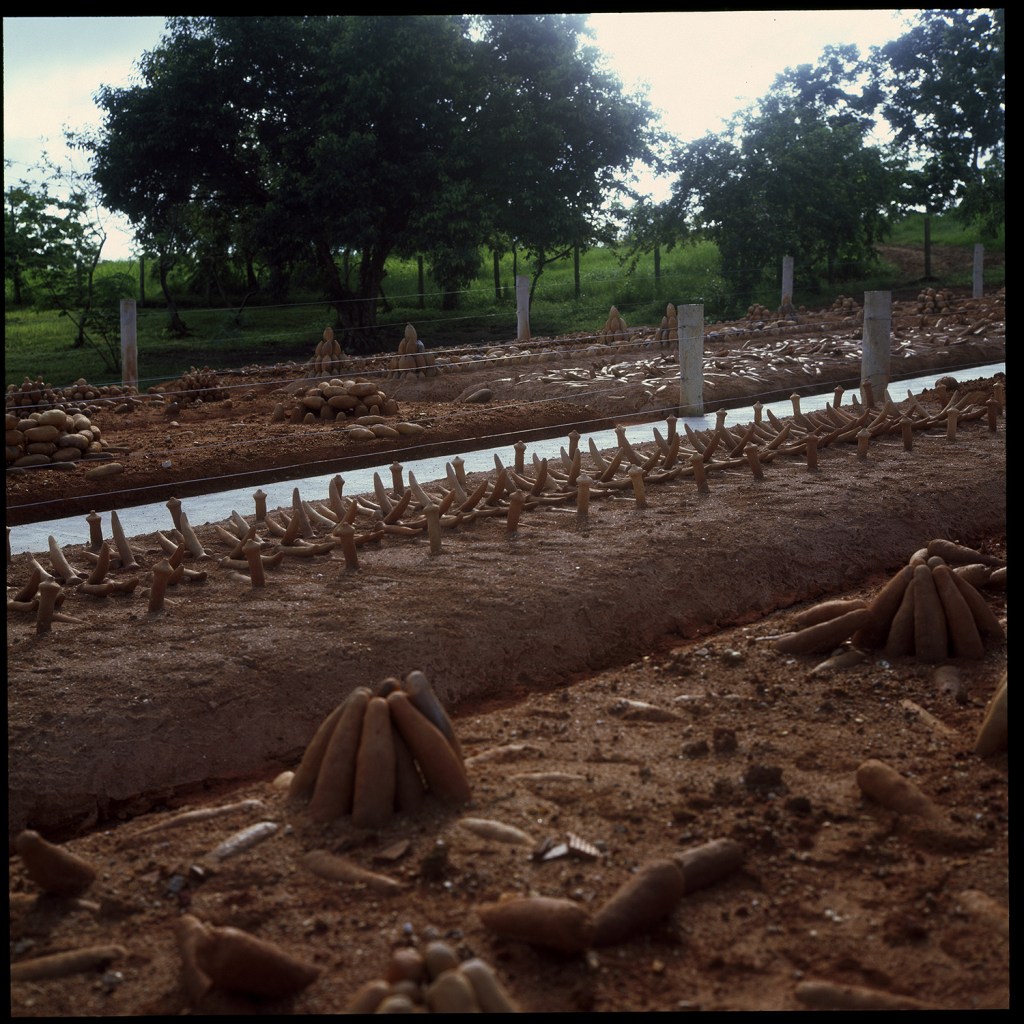
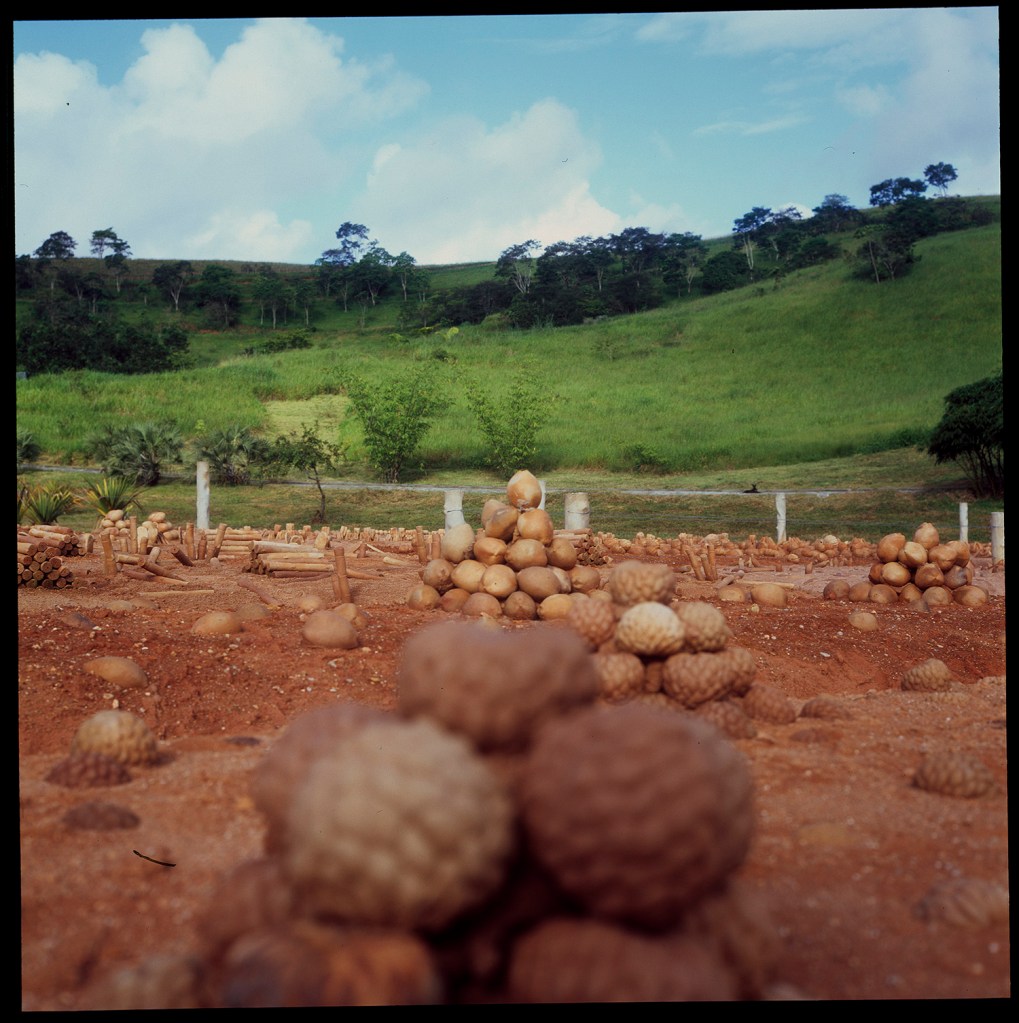
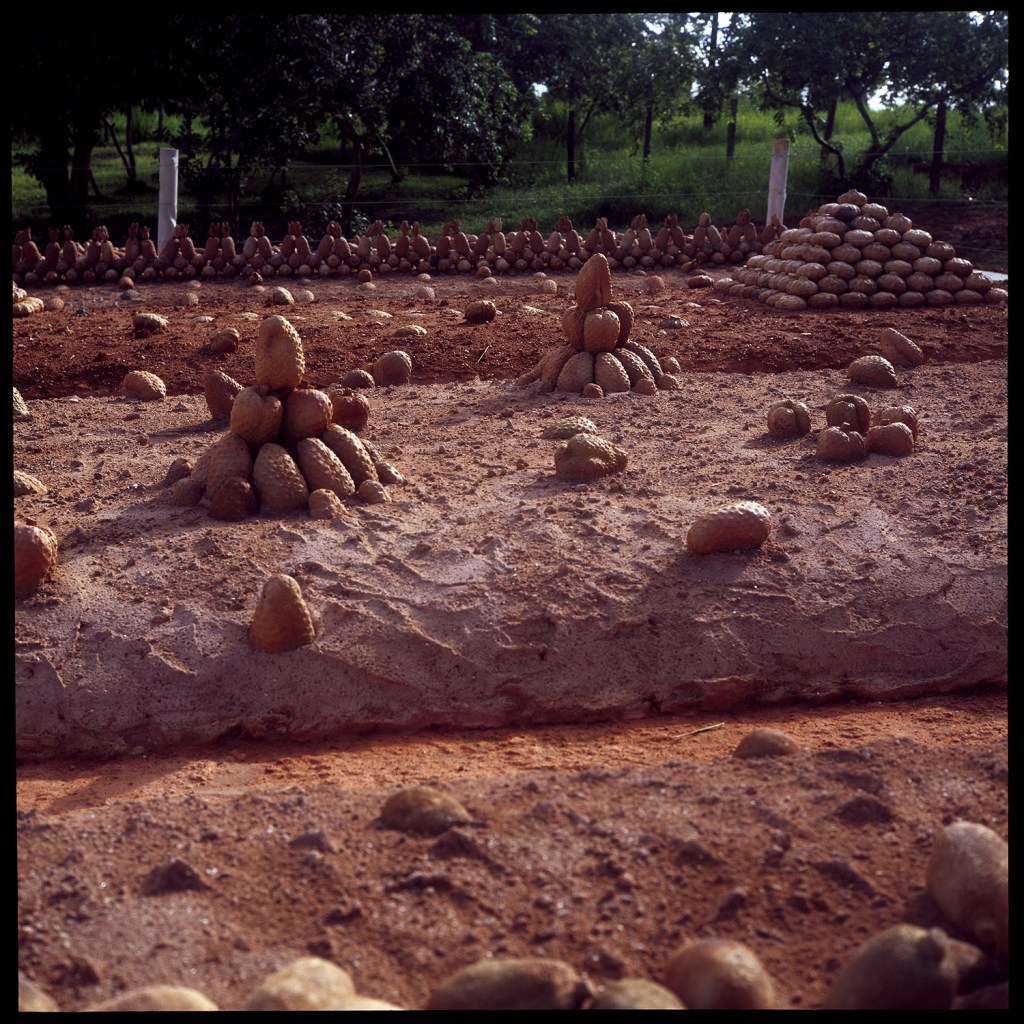
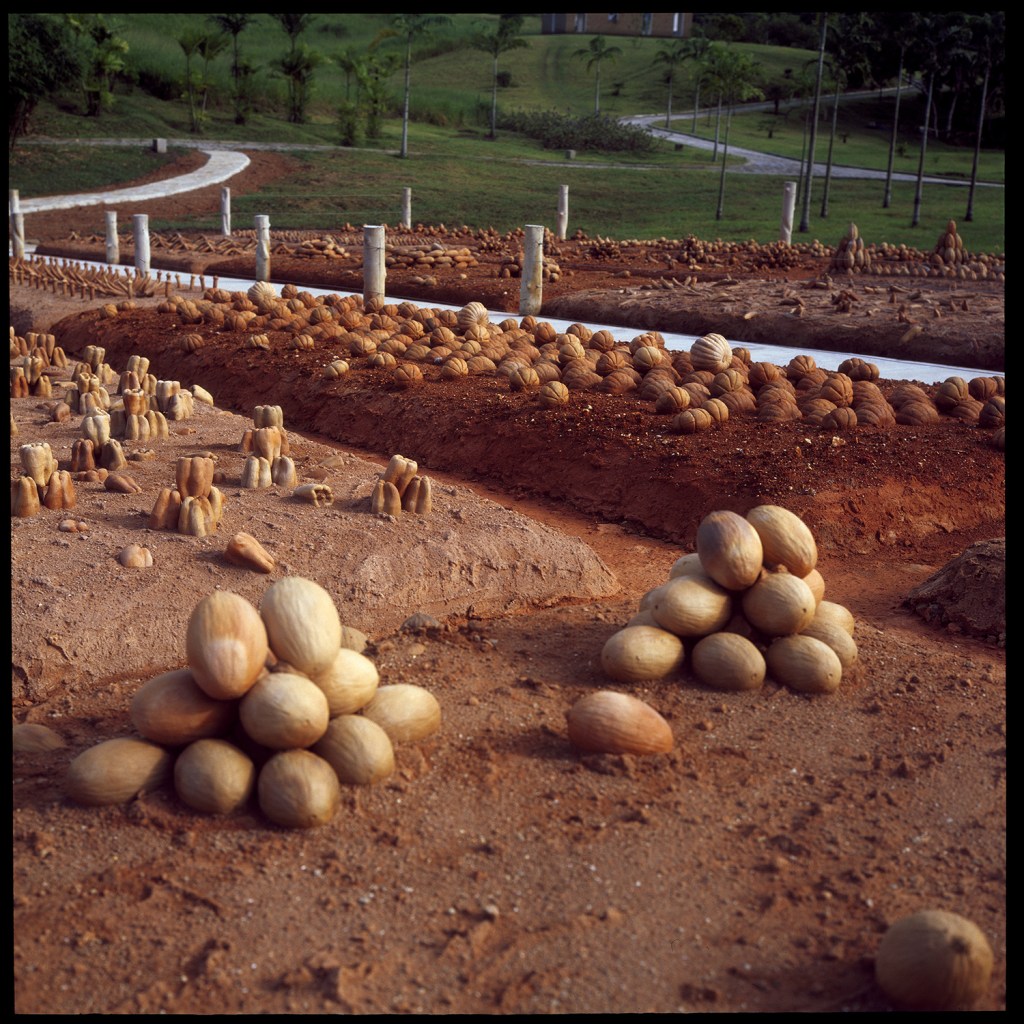
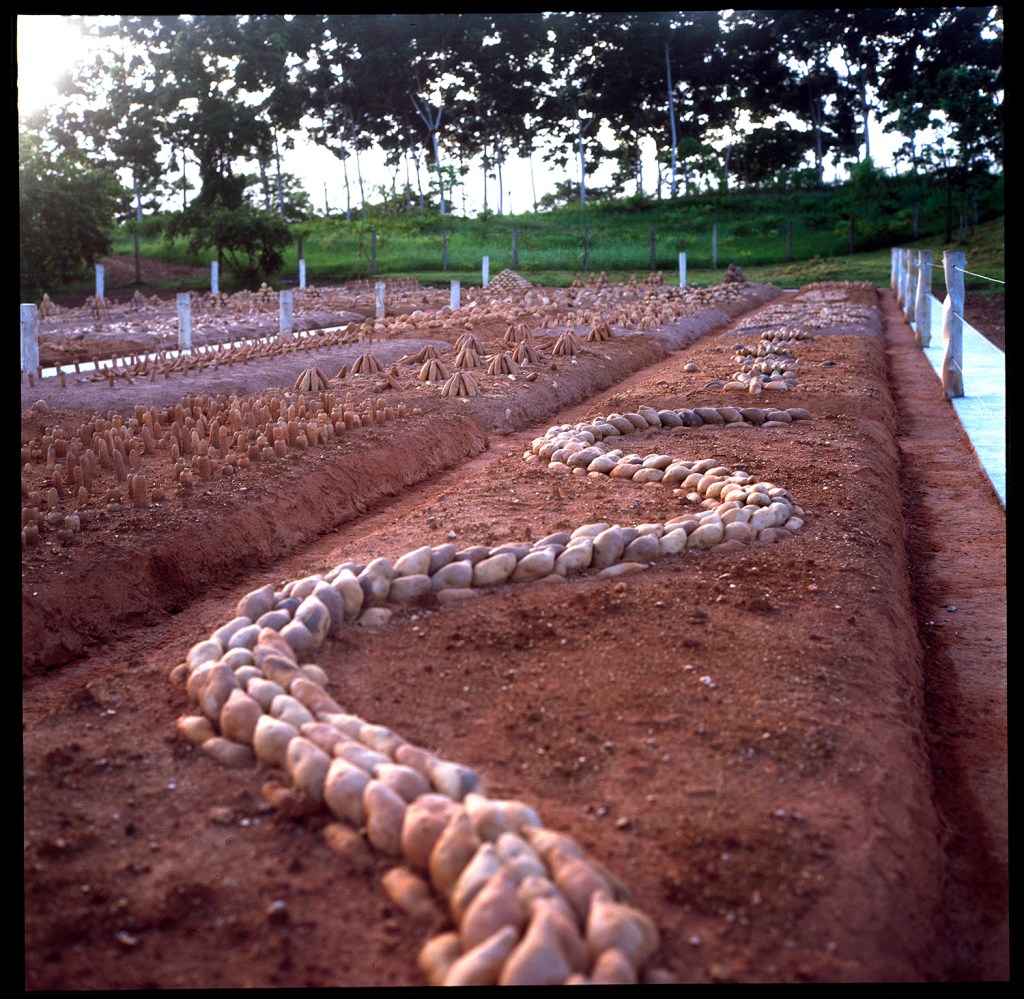
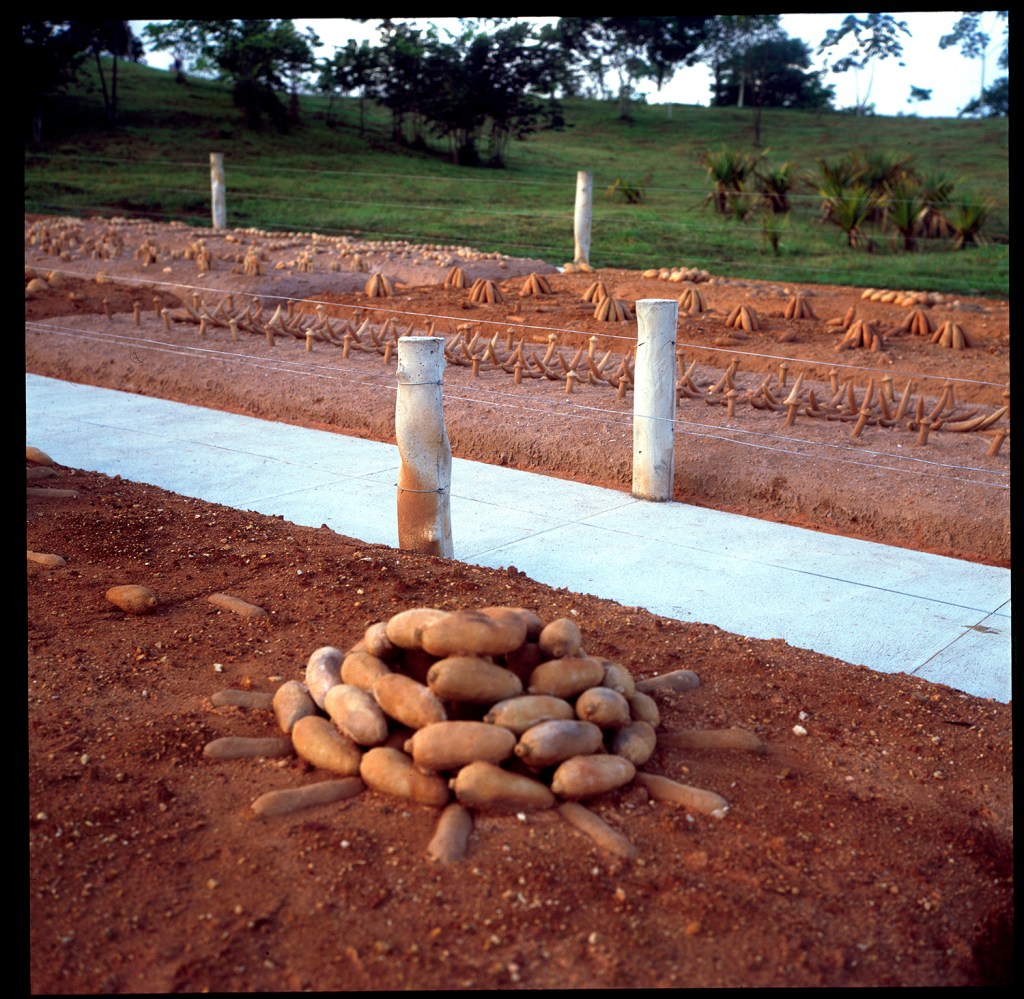
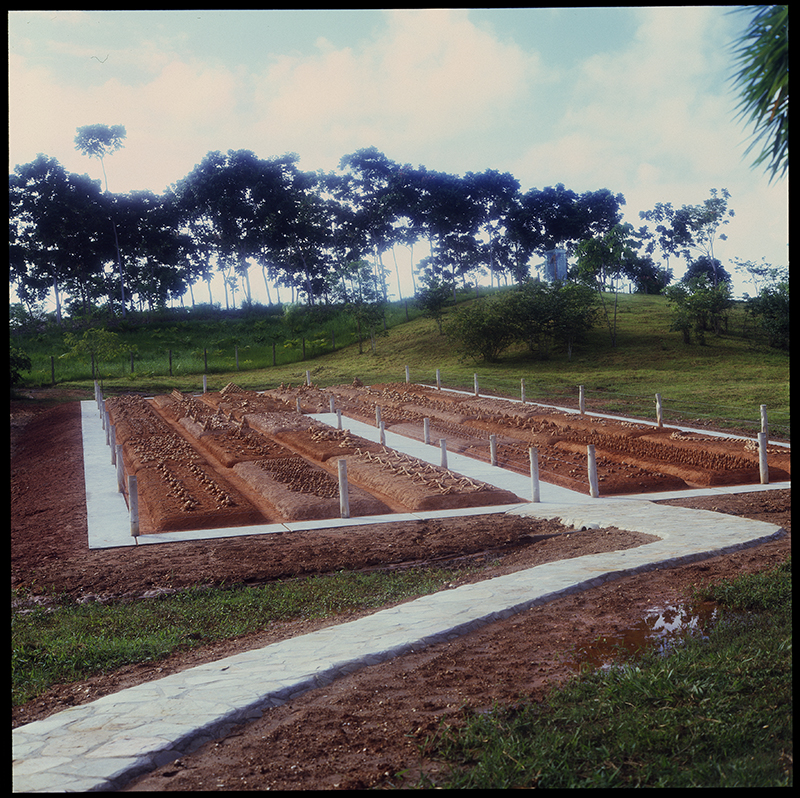
A Field of Hunger is an orchard of stone, concrete and clay. Each of the 30 vegetable garden beds holds a cluster (approximately 9000 pieces) of fruits, roots and vegetables made in clay, by a traditional local artisan. It covers a 720 square meters area.
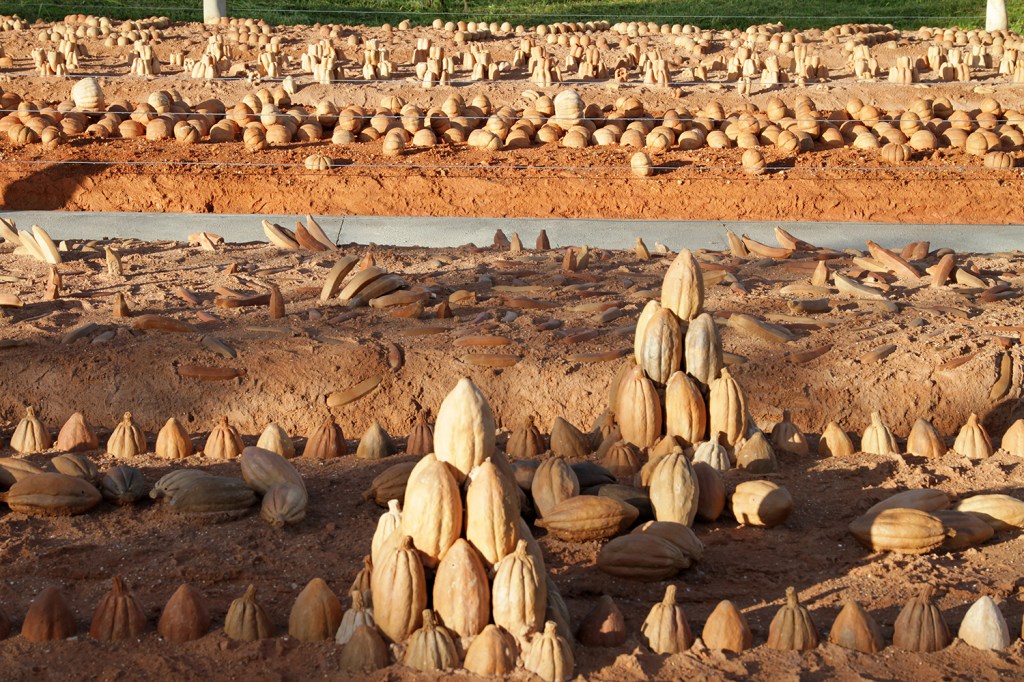
Informed by Glauber Rocha’s “Aesthetic of Hunger” (an anti-colonial manifesto from 1966 that stated that “hunger is the nerve of Latin American culture”), the piece was commissioned by Usina de Arte, a sculpture garden (and a former sugar mill) in Pernambuco. Historically, the colonization of Brazil began with the monoculture of sugar cane, on the fertile lands by the coast. Cattle breeding, subsistence and familiar agriculture was pushed to the less fertile inland, the famous “sertões”, the poorest part of the country and the main source of internal migration in the 20th century. The work inscribes itself against this geographic contradictory background, but also along a Brazilian literary and filmic tradition that locates the “sertões” as a site of political resistance and myth.
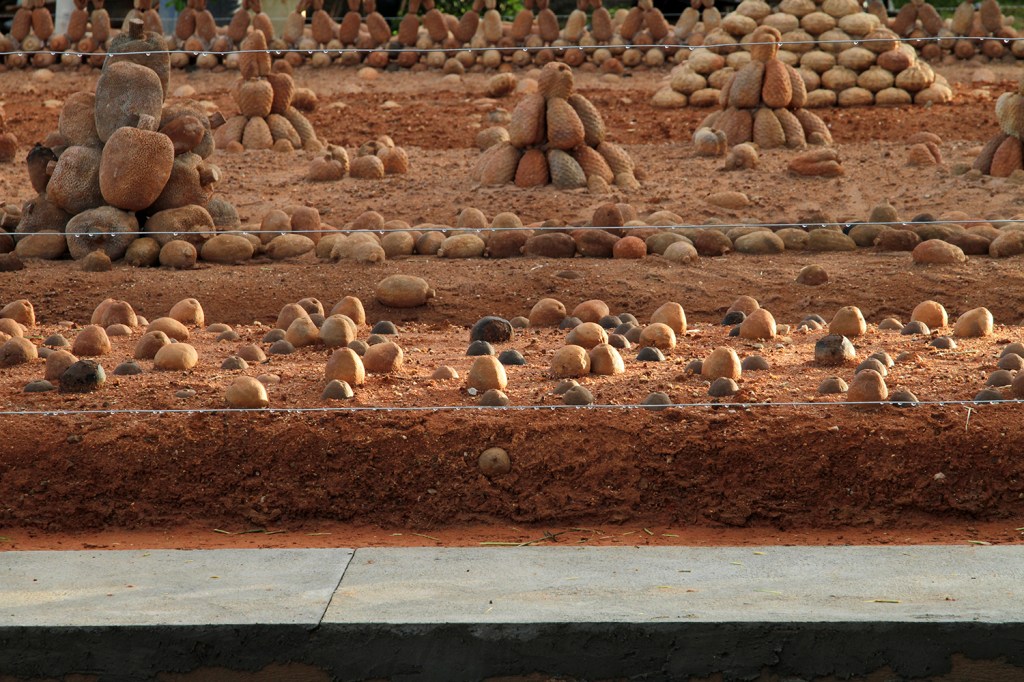
The field is fenced and no one can get inside of it, except by an internal path, also fenced. Its title comes from a homonymous place in Athens, described by the 1st century Greek geographer Pausanias. At the east of the Acropolis, there was a piece of land dedicated to Boulimos, Famine. It was a field never cultivated, resting in the center of the humanized city. The field of hunger represented the wilderness that man should not touch: to do so was considered sacrilege punished by famine. Left untouched, the sculpture thus performs this closure and containment of hunger, as an amulet or altar that would avoid the spread of famine.
 matheus rocha pitta