The Curfew Sirens
The examination of gesture plays a central role in Matheus Rocha Pitta’s works. As articulations of the body and language, gestures have far-reaching ethical and political implications. Over many years, Rocha Pitta has amassed an extensive archive of news clippings organized by quotidian gestural expression and place of origin. He arranges the material in multi-layered compositions on poured concrete slabs of different sizes and shapes. With his “petrified” collages, Rocha Pitta constructs stories, memories, and scenarios that reflect authoritarianism, misinformation and injustice.
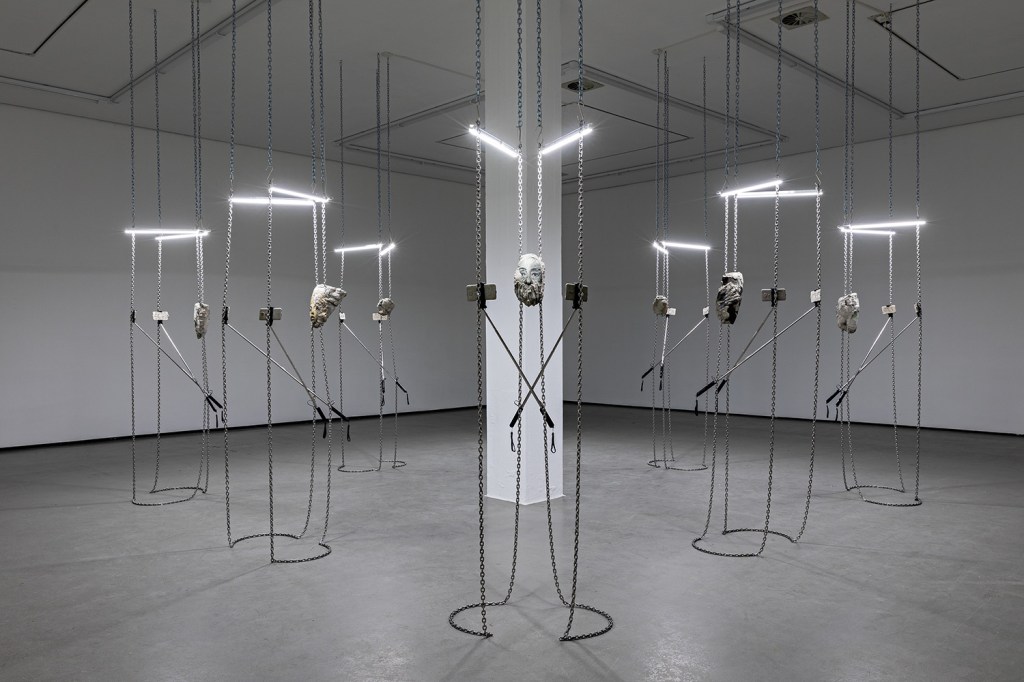
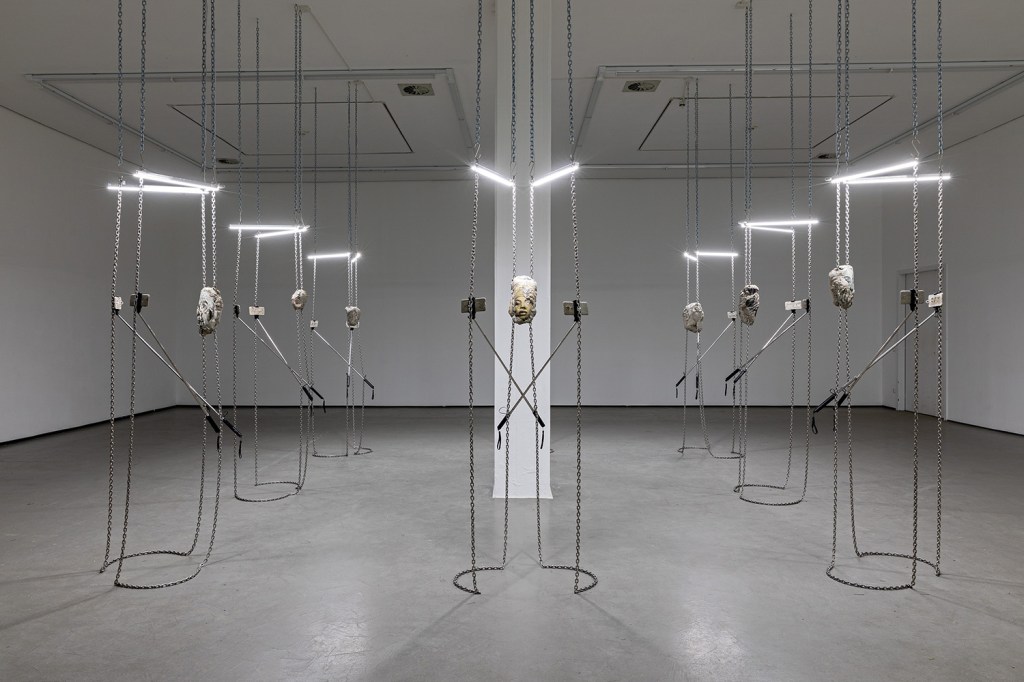
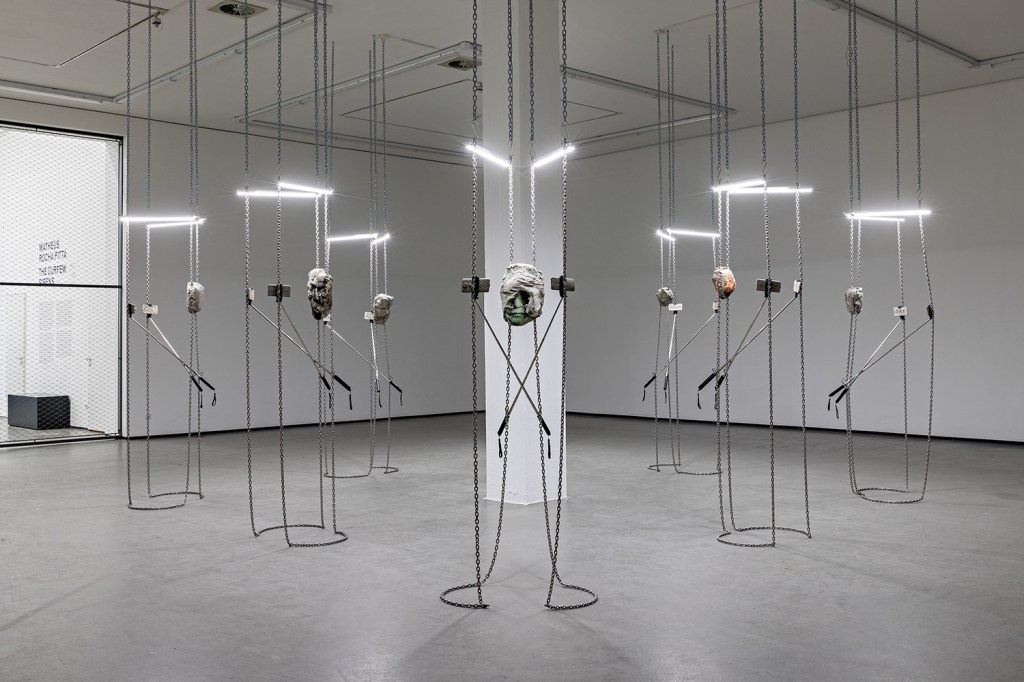
For his show in Hamburg, The Curfew Sirens, Rocha Pitta has developed a group of eight new sculptures called Sirens. The show’s title is already a play on the multiple semantic levels involved in the works. Literally it is an alarm announcing the start of a curfew. “Curfew” is borrowed from old French and means “to cover” as well as “fire,” referring historically to a protective plate for putting out fire. Only gradually did the meaning of the word change from a protective to an authoritarian connotation. In medieval England, the so-called “curfew bell” was used to ring the bell at night to remind people to cover the embers in their homes to prevent fires. The siren itself is not only an alarm sound, but also a mythical creature from ancient Greece, which attracts sailors passing by with its beguiling singing and plunges them into ruin. With the word combination The Curfew Siren, Rocha Pitta adds attributes to his sirens that alternate between state control and protective gesture.
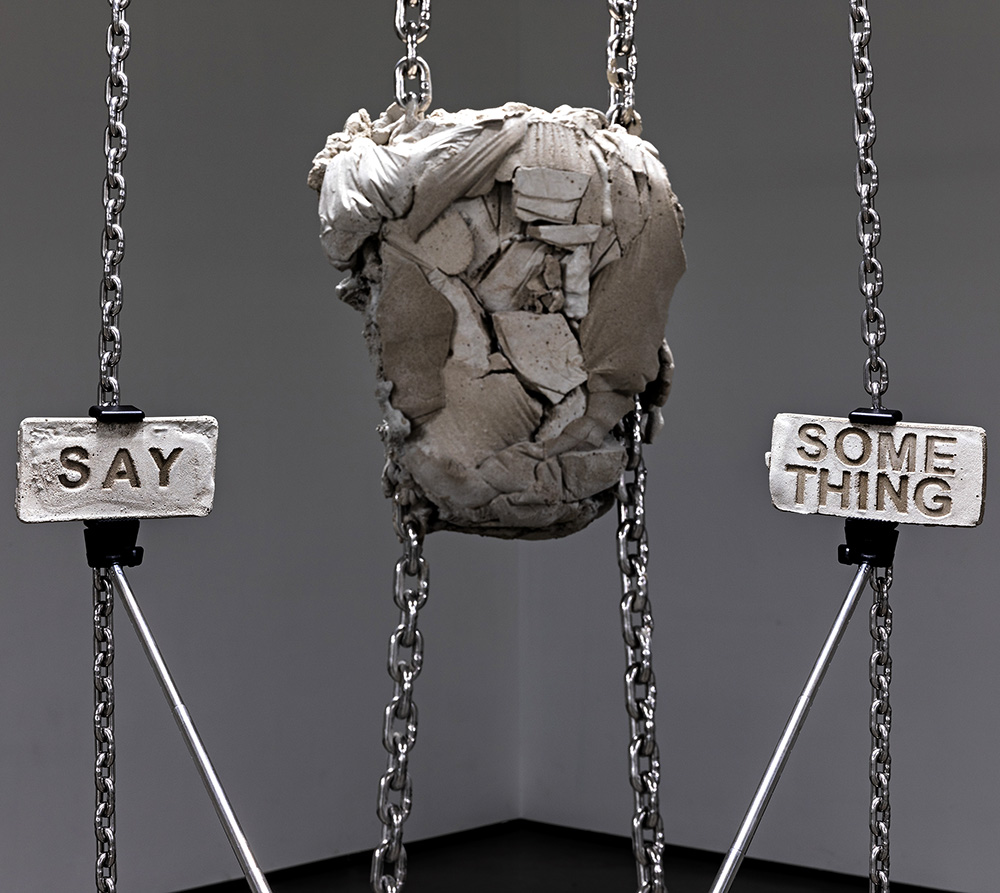
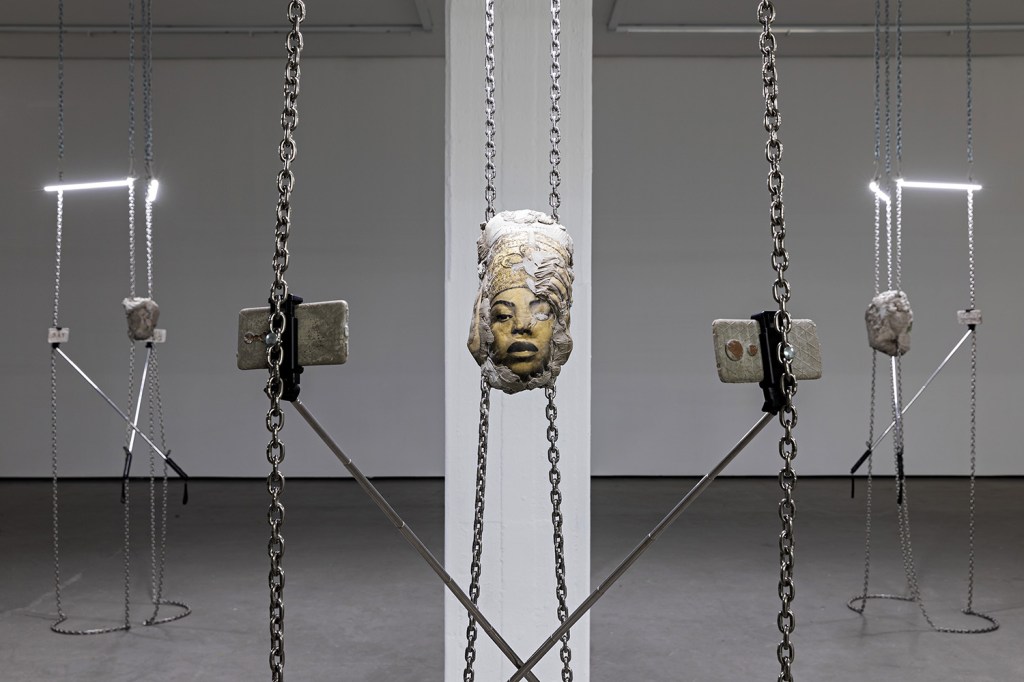
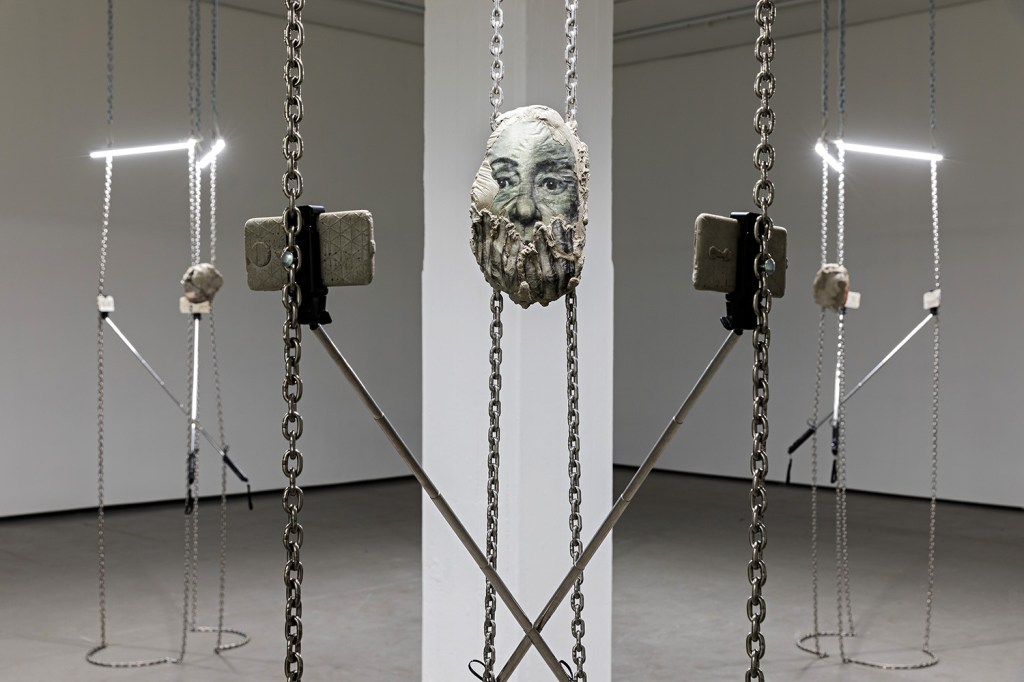
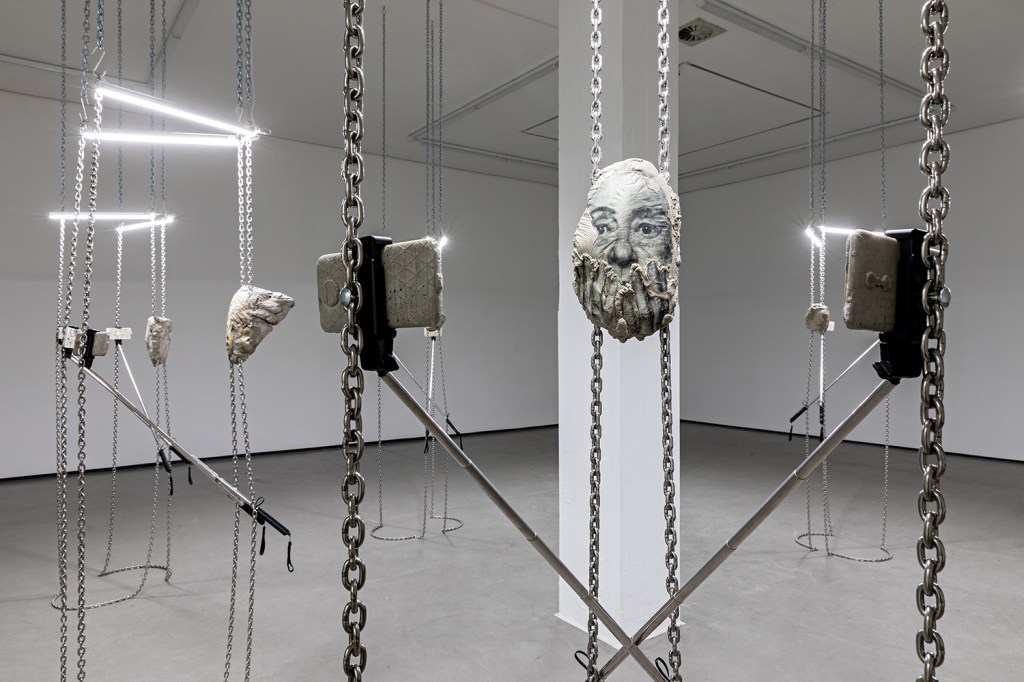
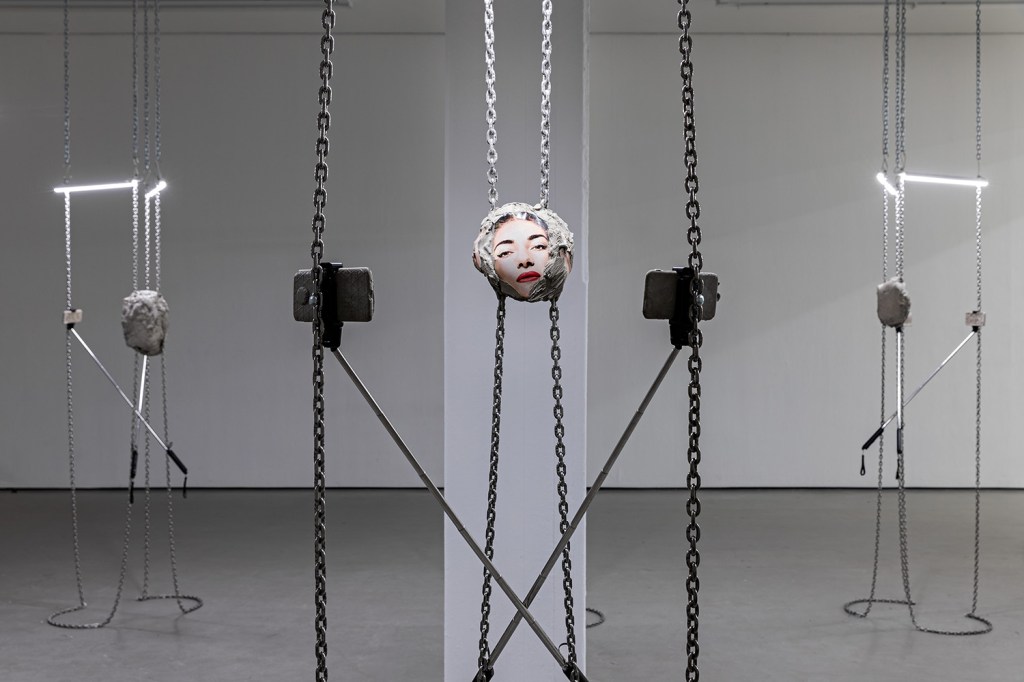
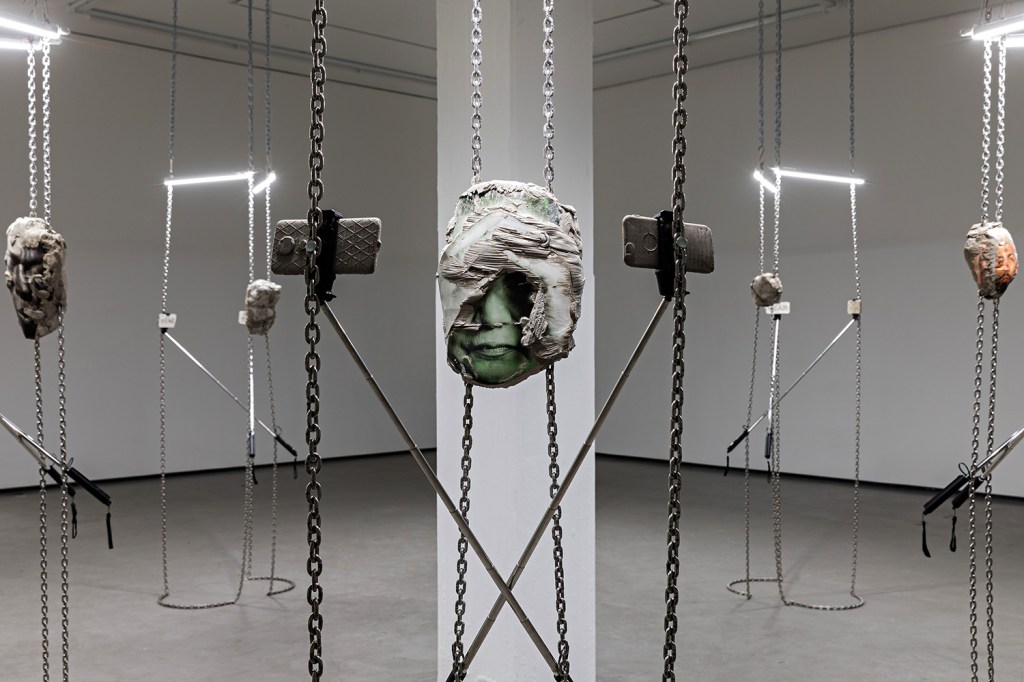
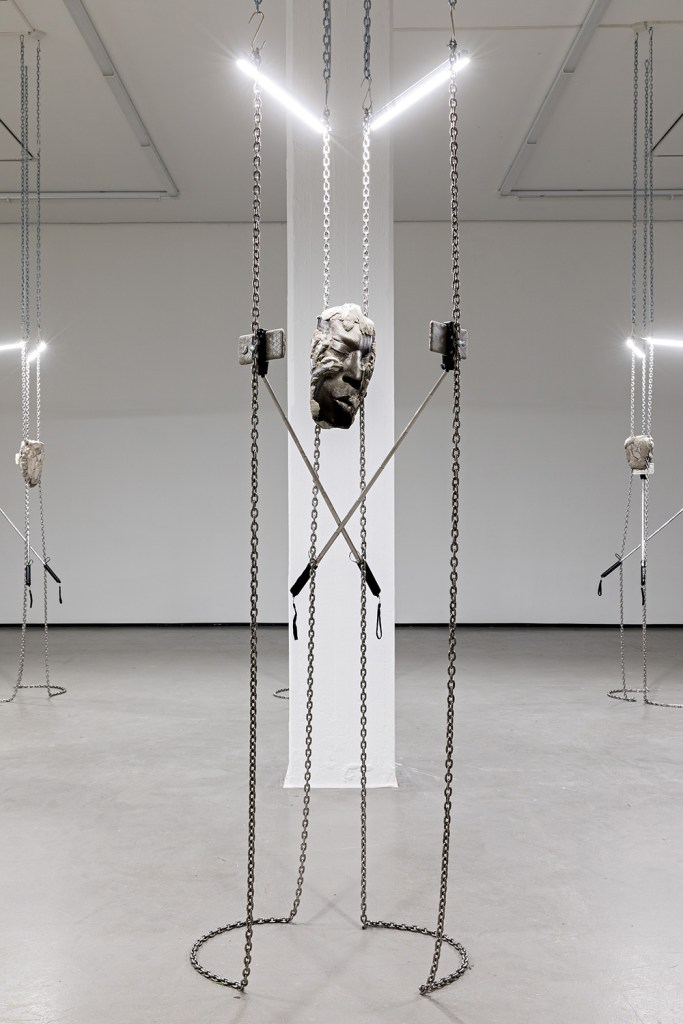
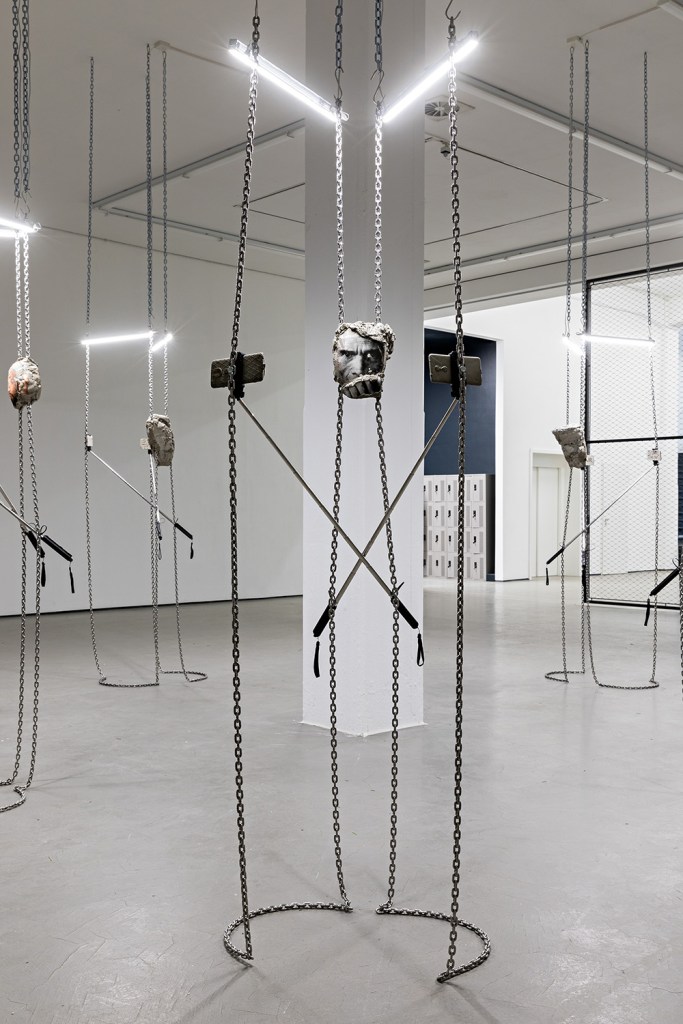
This continues also in the sculptures with the heads of the Sirens showing gestures of closed mouths, ears and eyes, which open up a multitude of points of reference. The artist plays, for example, with the three wise monkeys of a Japanese proverb, which would mainly be recognized today as emoticons used in text messages. In the West, the monkeys covering their mouths, ears, and eyes are primarily connected to the idea of not wanting to recognize something evil. In their original meaning, however, they stand for morality and humanity.
The title of the works and especially the covered ears is a reference to Odysseus’ encounter with the eponymous chimera. According to Homer’s legend, curiosity drove him to listen to their captivating but fatal promise of omniscience. He could only resist the urge to dock and thus leading his crew and himself inevitably into disaster by having himself tied to the ship’s mast. Analogous to this, Rocha Pitta’s Sirens are placed around the central pillar in the exhibition space, but turn away from it and towards the visitor. Therefore, it remains unclear who is resisting whom in this arrangement.
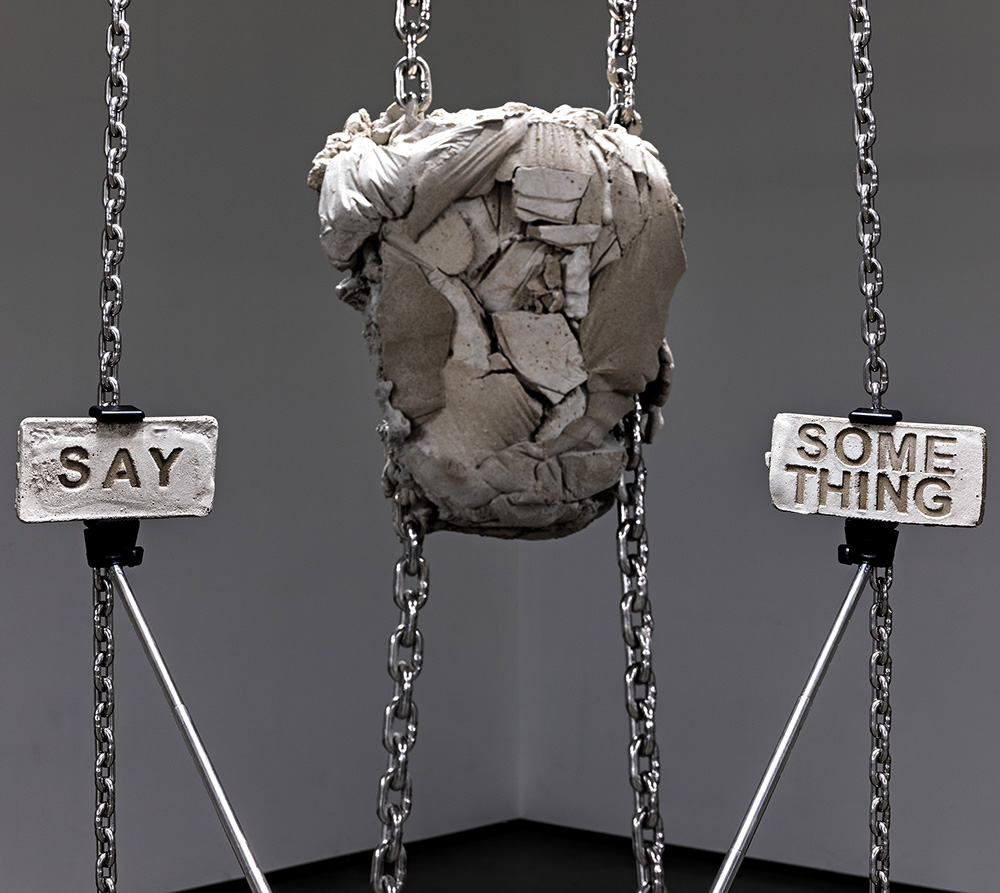
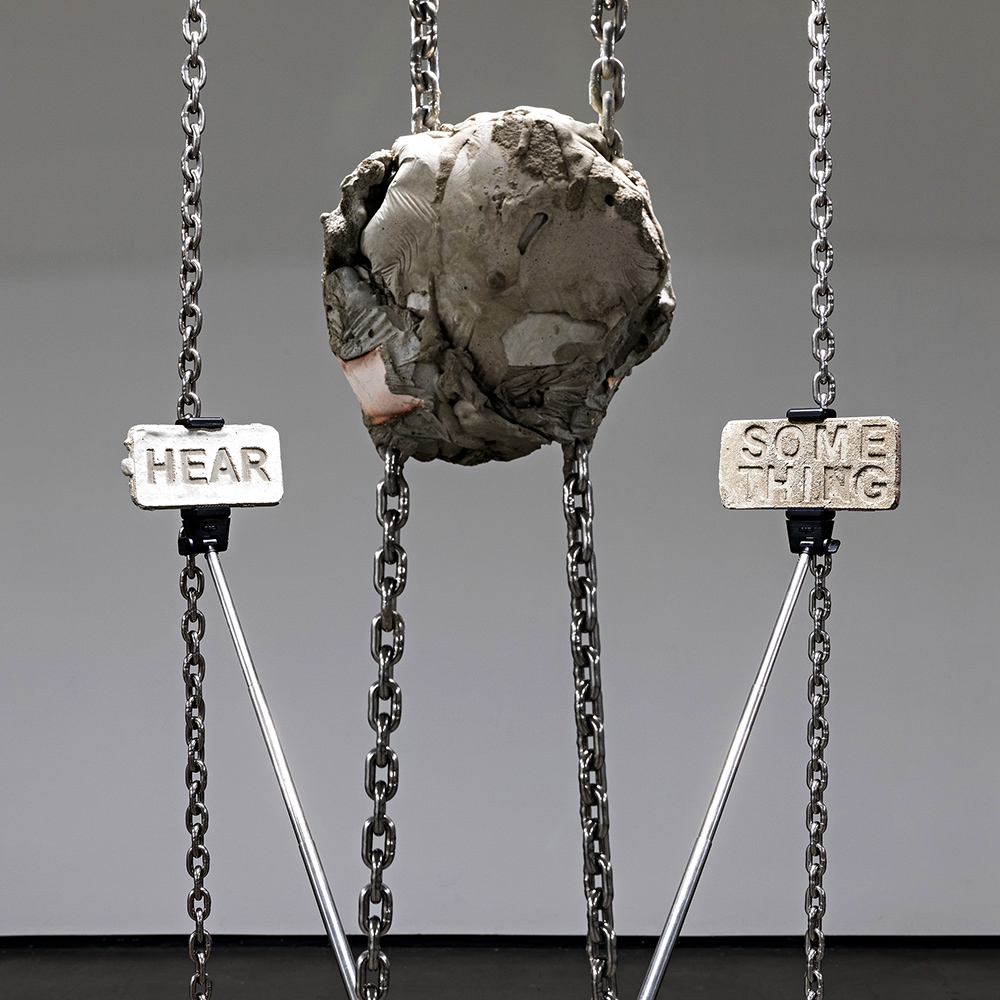
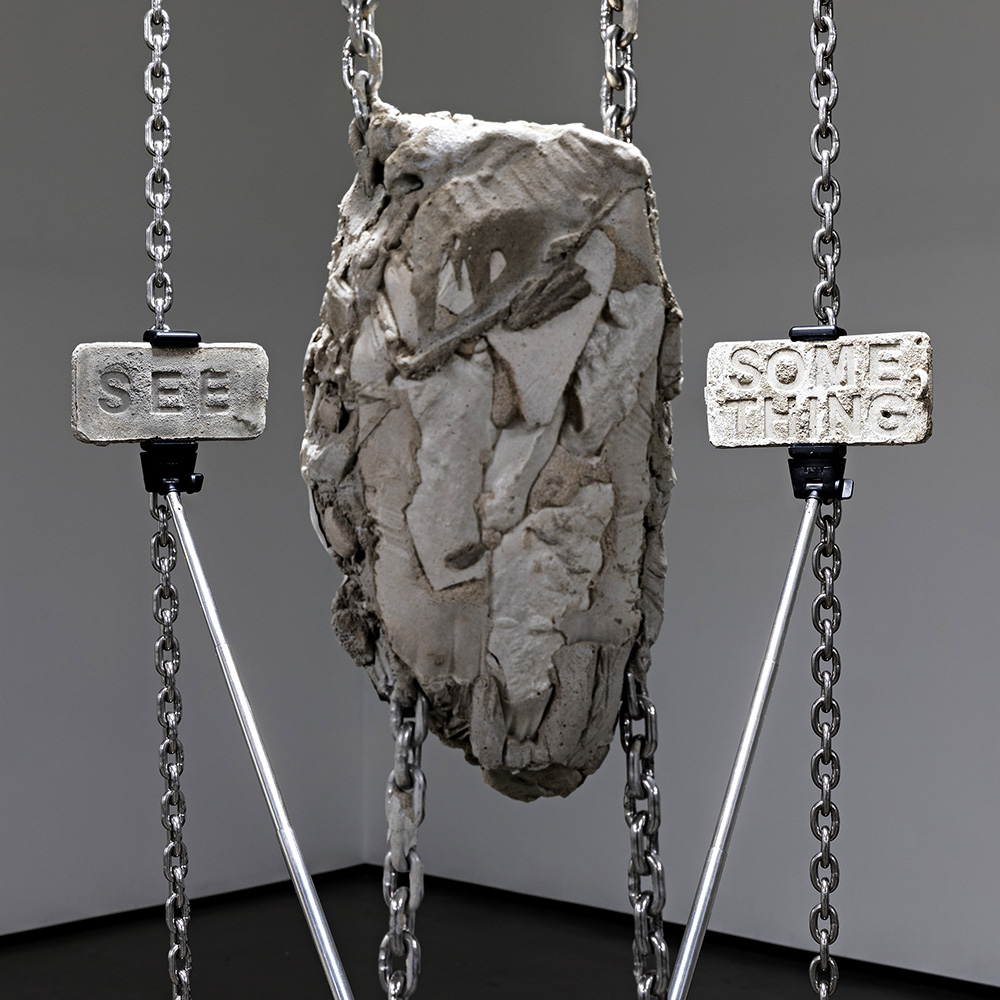
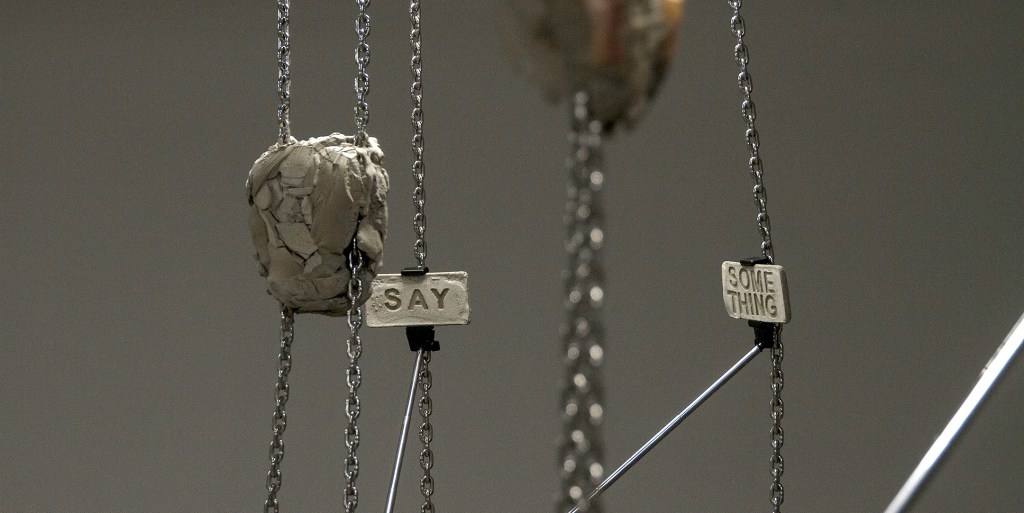
The artist likewise considers the selected gestures in relation to the urge for constant expression of opinion and streaming from social media and an increasing surveillance mentality. Each Siren is holding two selfie sticks with stone cell phones on whose screens, in contradiction to the gestures on display, can be read “Hear Something!,” “See Something!,” and “Say Something!” An ambivalent action-reaction loop is thus developed within the work and with the audience as it remains questionable who is being challenged to hear, see, and speak.
Matheus Rocha Pitta asks the questions of who has the right and power to speak and what authority can withdraw it. Especially with its observations of how violence is increasingly being used to strengthen public discourse, the show searches for a moment of pause and balance. Its Sirens are profoundly human representatives who seem trapped between resistance and resignation.
Tobias Peper, curator
 matheus rocha pitta